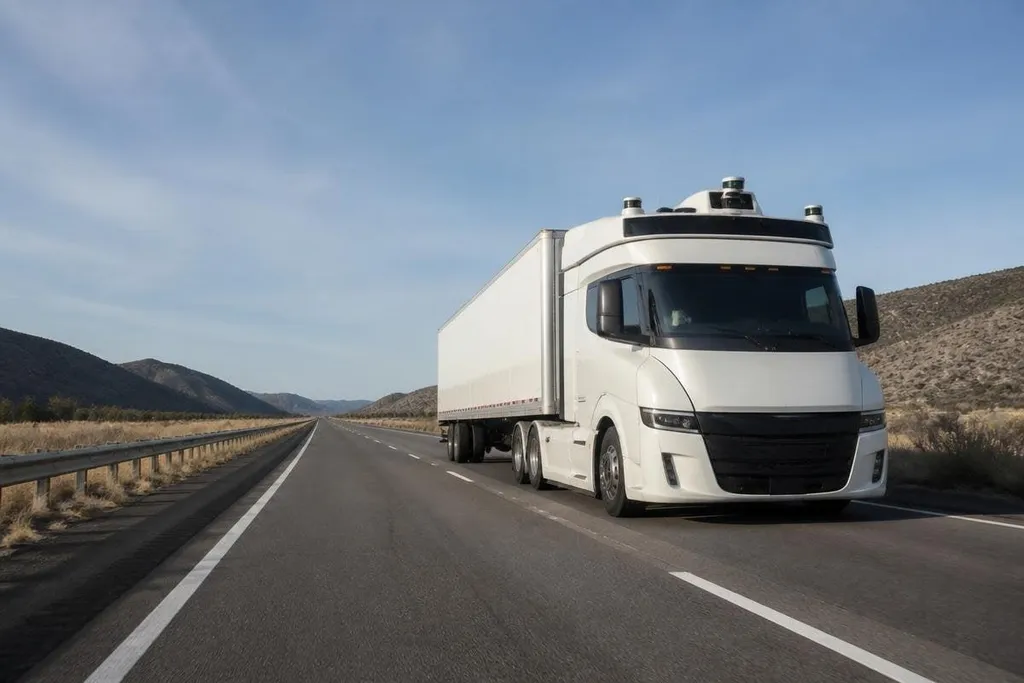
A self-driving truck can keep moving for hours, but that doesn’t mean it can handle every road, weather change, or loading site. The next phase will likely focus on repeatable freight routes where the truck’s sensors, maps, and remote support can be checked against the same tasks each day.
- Highway driving is easier to control than busy loading yards.
- Remote help will still matter when the truck meets an unusual problem.
- Costs, safety rules, and public trust will decide how fast companies expand.
Where the first jobs will happen
A truck spends much of its working life on roads that follow known patterns. A route between a distribution center and a nearby freight terminal gives the software fewer surprises than a city delivery run with cyclists, tight turns, and changing parking spaces.
That makes repeat routes a practical starting point. The truck can use cameras, radar, and LiDAR to read lane lines, vehicles, road edges, and objects around it. Maps can add details that sensors may miss, such as a sharp bend or a low bridge.
The easier part is staying in a lane at highway speed. The harder part often begins when the truck leaves the highway. A yard may contain workers, trailers, temporary barriers, damaged pavement, and vehicles moving in several directions at once.
A company that wants autonomous freight will need a clear plan for those areas. It may use a human worker on site, a remote operator, or a handoff point where a person takes control of the final movement.
Remote support will remain part of the system
Autonomous trucks won’t work as sealed boxes that handle every problem alone. A remote operator can review a blocked lane, a police direction, or an object the software cannot classify with enough confidence.
That operator may not control the truck second by second. Their job may be to approve a route choice or send the truck toward a safe stopping area. The truck still needs to slow down and stop safely before help arrives.
This creates a new test for fleet managers. They’ll need to know how many trucks one operator can support, how fast the network connection must be, and what happens when the connection drops.
That operator count also depends on sensor limits and remote-control rules. Robot24.com autonomous truck reporting can tie those details to dated road tests and freight deployments, where the hard problems start outside the test route.
The hard problems are outside the test
A controlled test can show a truck following a route. It says less about heavy rain, road repairs, an emergency vehicle, or a loading dock that has changed since the map was made.
Weather creates several problems at once. Rain can blur camera images, while spray from nearby vehicles can hide lane markings. Snow can cover road edges, and strong sunlight can affect what cameras see. Each condition needs testing on the roads where the truck will run.
Safety rules also need to cover the whole operation. That includes the truck, the remote support team, the freight site, maintenance staff, and people who share the road.
A safe autonomous system can still create trouble if workers don’t know when the truck may move. Clear signals and site rules will matter as much as the software in the cab.
The business case has its own limit. Removing a driver from part of a trip may cut labor costs, but companies still need to pay for sensors, software, remote staff, repairs, mapping, insurance, and new site procedures. Those costs have to fit the freight work the truck actually performs.
What to check before trusting a forecast
A useful forecast should answer practical questions rather than repeat a launch claim. Check these points before you judge an autonomous truck project:
- Route limits: Which roads, terminals, weather conditions, and operating hours are covered?
- Human control: Who handles an unusual event, and where does that person work?
- Safe stops: Can the truck pull over when its sensors, maps, or network connection fail?
- Site work: How are loading yards, trailer connections, inspections, and repairs handled?
- Cost proof: Which costs are published, and which ones remain estimates?
- Public results: Has the system worked outside a planned test?
Those answers show the distance between a road test and a freight service. I'd wait for repeated operation across changing conditions before treating a truck as ready for broad use.
The near future will belong to autonomous trucks with narrow routes, clear handoff rules, and people ready for the cases software still can’t handle. The open question is how many routes can meet those conditions at a price freight companies will accept.